
Have you ever noticed how being in a beautiful natural setting can calm your mind during difficult times? I’ve been thinking about this for over 40 years — ever since I designed a very particular kind of garden.
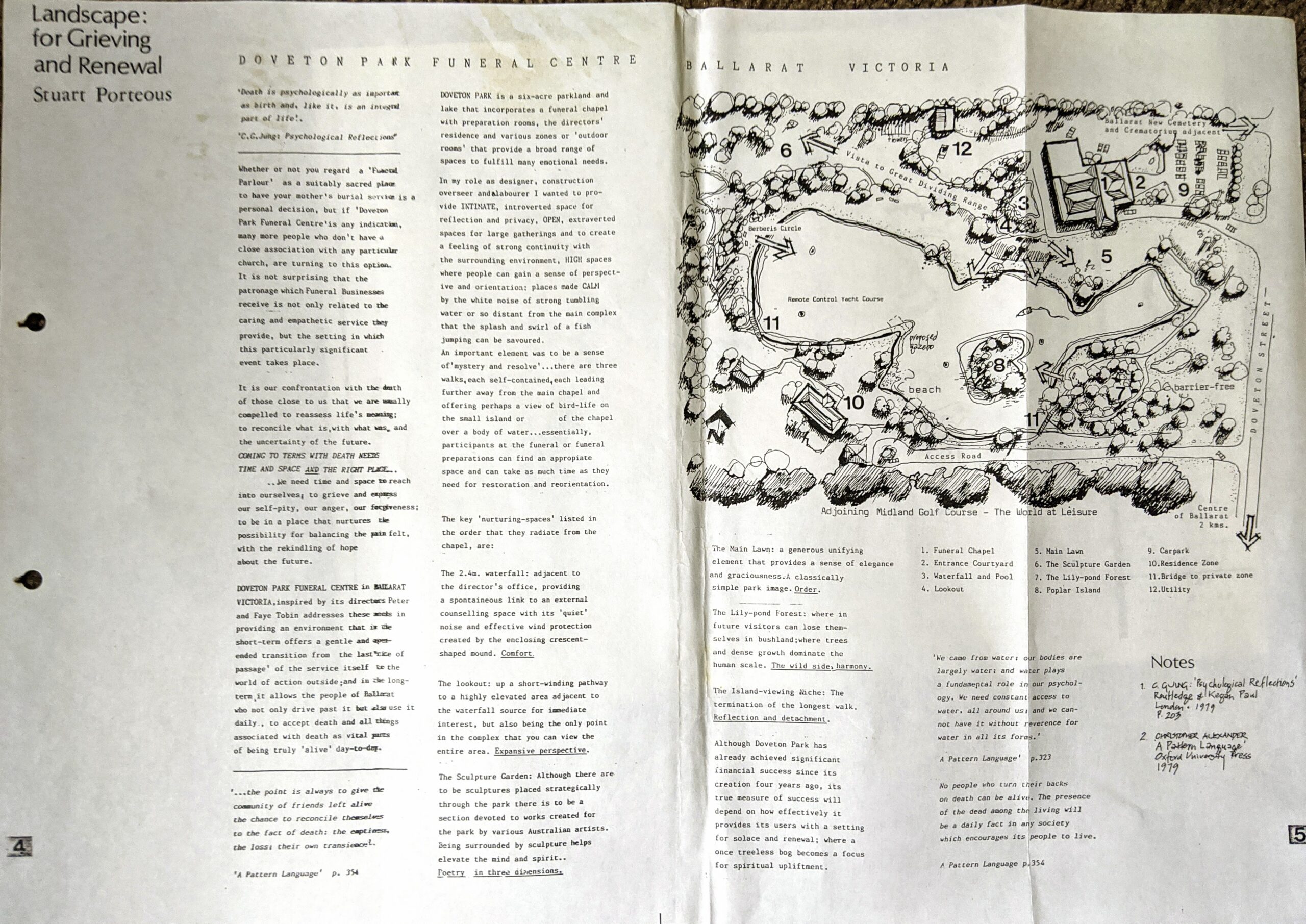
In 1983, I was commissioned to transform a treeless, boggy paddock on the edge of Ballarat into a landscape for a funeral centre. It sounds, on the face of it, like an unlikely project for a young landscape architect. But it became one of the most meaningful things I have ever made.
A Place for the Hardest Days
The directors, Peter and Faye Tobin, had a clear vision: they wanted people to feel held by the landscape at Doveton Park — not just on the day of a funeral, but for as long as they needed. What they were asking for, I came to understand, was a landscape that could sit alongside grief without flinching.
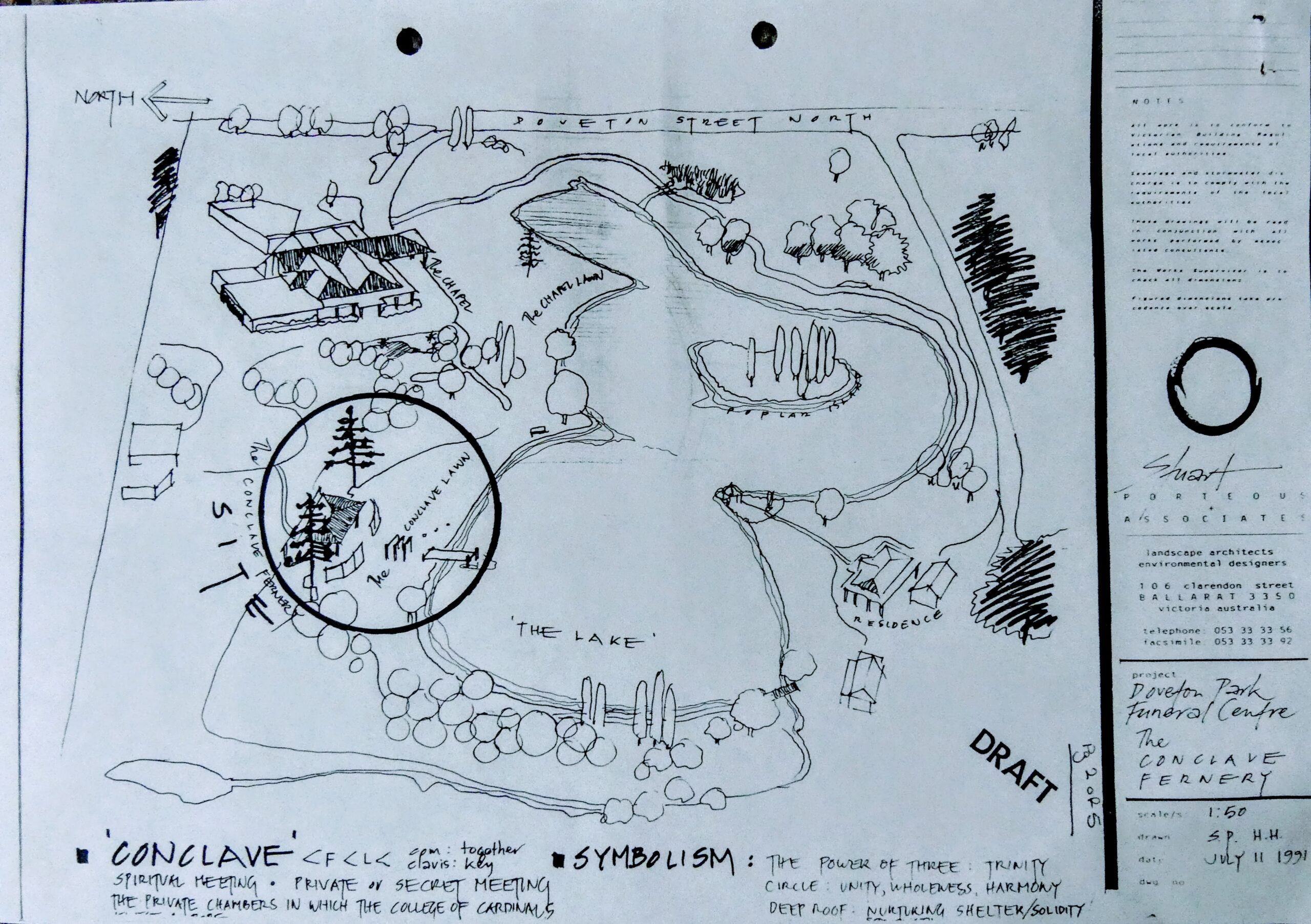
I designed the six-acre site around the chapel, drawing people through a sequence of spaces — some intimate and sheltered, some open to the sky, some with moving water, some still. A 2.4-metre waterfall created a gentle curtain of sound for quiet conversation. A raised lookout offered perspective when everything felt close and heavy. A lily-pond forest gave shelter for those who needed to disappear, briefly, into green.
What the Landscape Did
What I discovered in that project — and what research has since confirmed — is that landscape does something to us that nothing else quite can. It holds us without expectation. It offers beauty without demanding anything in return. In the presence of water, trees, birdsong and the slow rhythm of seasons, something in us settles.
The ancient Stoics understood this. So did the great garden-makers of Japan, Persia, and medieval Europe. The healing garden is not a modern invention — it is a very old human instinct.
Why I’m Still Thinking About It
I’m writing about Doveton Park now, 40 years on, because the same insight that shaped that funeral garden shapes the work I do today at Wellbeing Design Studio.
When people retire — or face any significant life transition — they often find themselves in a kind of unmapped territory. The old landmarks have shifted. The familiar structures of work, role, and routine no longer define the days. And in that open space, landscape matters more than ever.
The Five Streams framework I use in my courses — Connection, Contribution, Creativity, Contemplation, and Challenge — is really a design for living well. And at the heart of each stream is the same question the funeral garden asked: What does this person need, right now, to feel held?
An Invitation
If you’re in or approaching a life transition, I’d love you to consider one small thing this week. Find a place in nature — even a modest one — and give yourself 20 minutes without an agenda.
Not to exercise, not to achieve, not to photograph. Just to be in it.
Notice what it does to you.
That noticing is the beginning of good design for living.